Indoor vs Outdoor Logo Mats: A Comprehensive Guide

Highlights:
-
Outdoor logo mats remove mud, dirt, and debris before entry, while indoor mats absorb moisture and maintain a clean interior environment.
-
Material differences matter: outdoor mats use tough, weather-resistant materials, whereas indoor mats focus on comfort and detailed logo printing.
-
Indoor mats enhance branding with clearer logos and colours, while outdoor mats prioritize durability and effective debris removal.
-
Using both indoor and outdoor logo mats improves cleanliness, safety, and professional brand presentation across commercial entrance areas.
Logo mats are a practical way to keep entrances clean while promoting your brand. But not all logo mats serve the same purpose. The difference between indoor and outdoor logo mats lies in their materials, design, and functionality. Mats are not just about looks; they play a vital part in keeping areas clean, safe, and protected inside or outside of your business premises.
By understanding the unique roles and features of different mats, you can make spaces safer and support your brand image and flooring with a smart choice. Outdoor mats focus on scraping off dirt and debris before people enter, while the indoor ones absorb moisture and highlight branding inside the building. In this blog, we will explore the difference between indoor and outdoor logo mats and how to choose the right ones.
What Is the Difference between Indoor and Outdoor Logo Mats?
Here you go!
Purpose and Placement
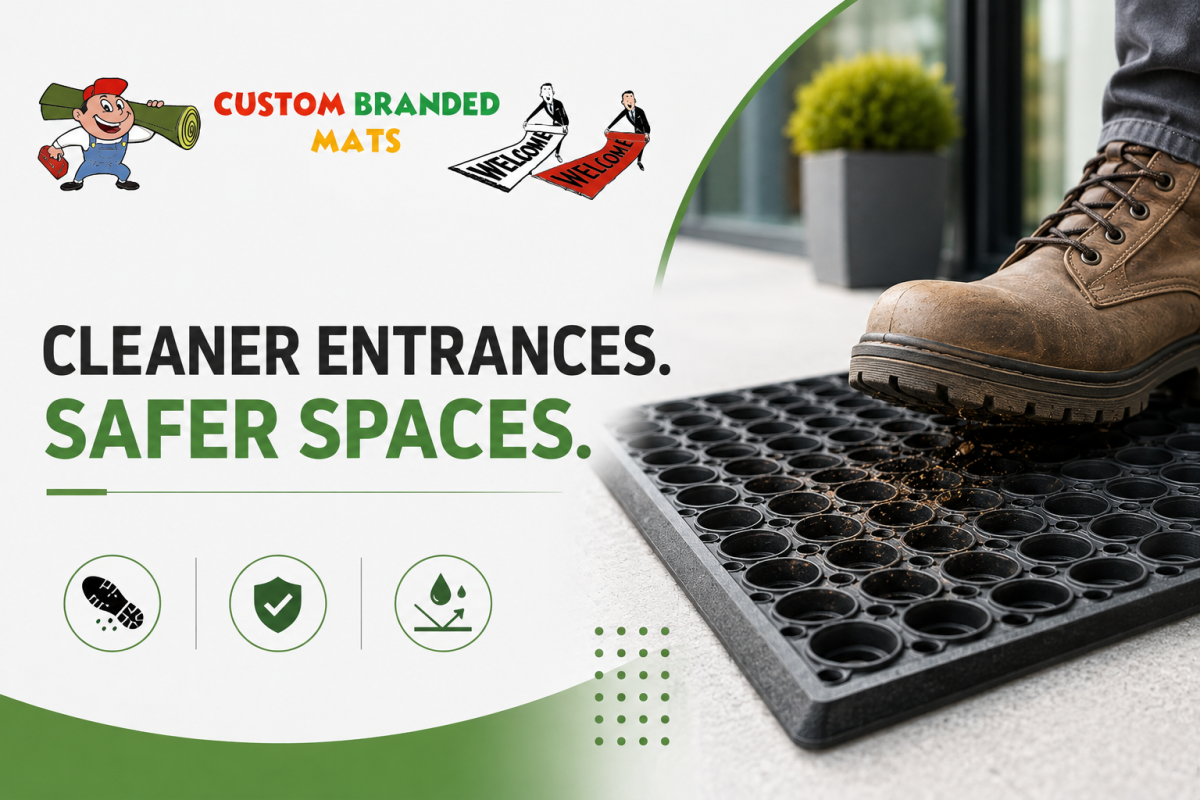
Outdoor logo mats are placed at the entrance outside a building. The main job is to scrape off mud, dirt, and debris from shoes before people enter. On the other hand, indoor logo mats are placed inside the doorway to capture finer dust and absorb moisture while also reinforcing brand visibility.
Durability
Outdoor logo mats are built to handle the harsh environmental conditions, including water, UV exposure, and temperature changes. Expert manufacturers design indoor logo mats for controlled environments and focus more on moisture absorption and appearance rather than extreme durability.
Dirt and Moisture Control
Outdoor mats remove large debris and mud with their coarse textures. Indoor mats act as a secondary barrier that traps smaller dirt particles and absorbs leftover moisture to keep floors dry and safe.
Design and Branding
For design and branding, placing indoor mats is more effective. These mats usually allow more detailed branding with vibrant colours and clearer logos. But the outdoor versions prioritize durability. So here, designs may be simpler but still visible for brand recognition.
Material and Construction
Outdoor ones are made from weather-resistant and tough materials such as coir and rubber. These materials can withstand sunlight, rain, and heavy traffic. Indoor logo mats usually use comparatively softer materials like carpet fibres or nylon to provide comfort and better logo printing quality.
How Do You Choose Indoor and Outdoor Branded Mats?
Choosing the right indoor and outdoor branded mats is important for maintaining safety, cleanliness, and a professional appearance. Outdoor mats for your commercial spaces should be made from durable and weather-resistant materials that can remove debris, mud, and moisture before people enter the building.
On the other hand, you should focus on absorbing moisture and trapping fine dust while complementing your interior decor. In addition, non-slip backing, proper size, and clear logo design are also key considerations for safety and effective branding. Always choose a reputable mat supplier to get high-quality custom logo and entrance mats suitable for both indoor and outdoor use.
Look, one size does not fit all when it comes to floor matting. For commercial spaces, indoor environments require different solutions compared to outdoor spaces, as each setting presents unique challenges.
Popular Posts
September 08, 2026
August 14, 2026
Leave a Reply