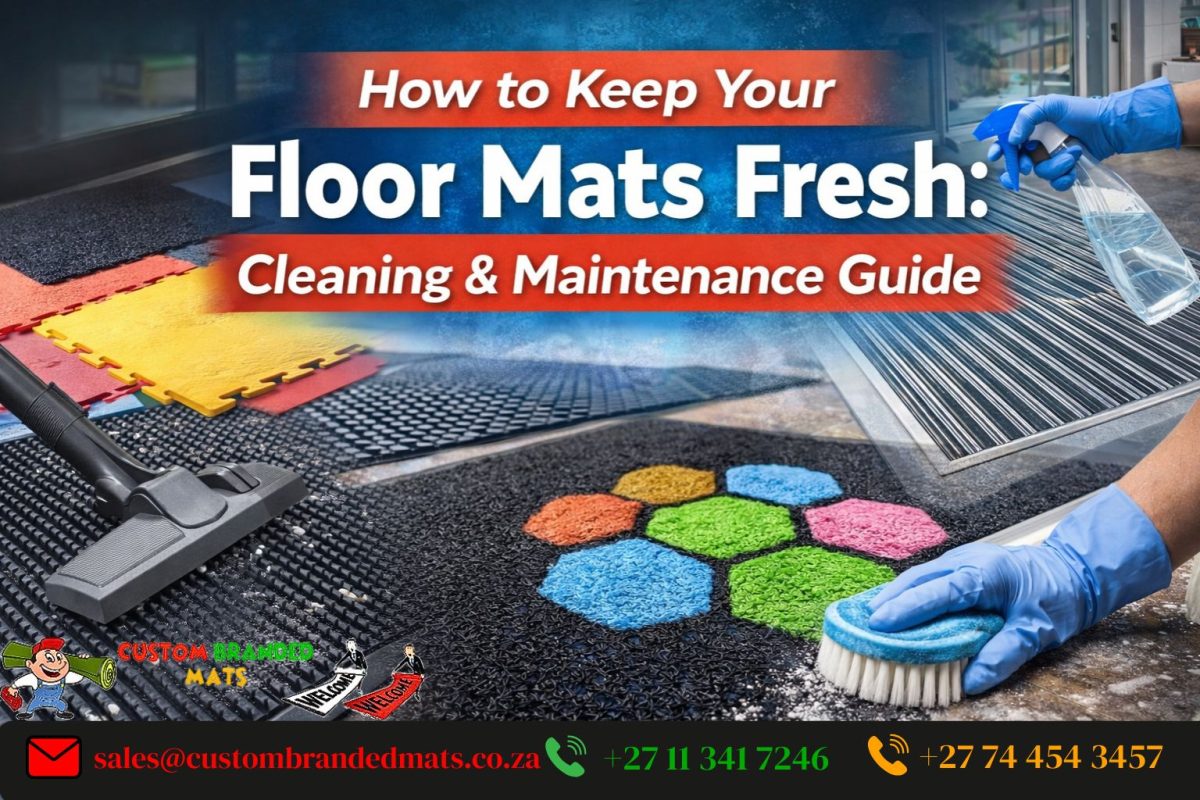
How to Keep Your Floor Mats Fresh: Cleaning & Maintenance Guide
Highlights:
- Regular cleaning of commercial floor mats prevents dirt buildup, protects flooring, reduces allergens, and maintains a safe, professional environment for employees and visitors.
- Removing loose dirt, vacuuming daily, and shaking smaller mats outdoors helps maintain mat effectiveness and prevents debris from spreading indoors.
- Prompt spot cleaning with mild solutions and gentle scrubbing helps remove stubborn stains while preserving the appearance and durability of mats.
- Washing, rinsing, drying mats properly, and cleaning underneath them prevents moisture buildup, unpleasant odours, and potential slip hazards.
It is easy to overlook floor mat hygiene. Heavy foot traffic can make day-to-day floor care challenging, but it is essential for preventing dust, dirt, and harmful allergens from entering your residential and commercial premises. You might wonder: How do I clean custom-branded mats properly at home? In this blog, we will provide some helpful cleaning and maintenance tips to keep your mats looking their best and encourage a good appearance all year round.
Importance of Mat Cleaning & Maintenance
Clean mats make a great first impression, and cleaning commercial mats also creates a safe and healthy environment for employees and customers while providing a barrier to protect flooring from spills and scratches. It can be said that multiple factors can affect the durability and lifespan of a floor mat, but maintaining cleanliness can help to counteract wear and tear.
It prevents early replacement of expensive materials. The main cause of workplace accidents is trips, slips, and falls. Properly cleaning entrance matting systems promotes a safe walking environment and contributes to a healthier workplace with fewer allergens.
Ways to Remove Dirt and Stains from Commercial Floor Mats Easily
Let’s read it!
Remove Loose Dirt and Debris
It is vital to remove loose dirt before it has a chance to get ground in or tracked through your building. The rubber mats should be dry-brushed, but the fabric mats should be vacuumed gently. Small and non-fixed mats can be shaken outdoors to disclose any debris. This step is especially important for outdoor mats, as they can collect large amounts of dirt, debris, leaves, and moisture before people enter your premises.
Spot Cleaning for Stubborn Stains
Stains in floor mats should be treated immediately using an appropriate method for your commercial spaces. You should blot stains gently to prevent damage before applying a cleaning solution. Use mild cleaning solutions and a soft brush and cloth to gently scrub the affected area. A prompt spot cleaning technique keeps your mats hygienic and preserves their appearance in high-traffic areas.
Wash, Rinse, and Dry Thoroughly
If your premises have robust rubber and vinyl matting systems, these need to be cleaned frequently using a damp mop. For most high-traffic mats, spraying on warm water and a dish soap solution will do the trick. After cleaning, it is important to rinse and thoroughly dry your mats before use to avoid slip risks.
Vacuum and Sweep Daily
You need to use an industrial vacuum cleaner with adjustable height settings to extract as much dirt as possible. Regular vacuuming or sweeping helps to maintain the cleanliness and effectiveness of floor mats. Businesses that use logo or image mats should prioritize daily cleaning to ensure the branding remains vibrant, clear, and professional for visitors.
Always Clean Underneath
For optimum floor mat hygiene, you should always vacuum or mop the floor underneath your mat. This area is just as important as cleaning the mats themselves. Dirt and moisture can accumulate under mats and might damage the flooring and create unpleasant odours. That’s why a thorough cleaning is important for everyone entering the building.
Regular cleaning and maintenance of residential and commercial floor mats help maintain cleanliness, protect flooring, and create a safer environment for everyone. This is a cost-effective approach as it can extend the lifespan of your mats while ensuring a tidy, hygienic, and welcoming environment for everyone.
Popular Posts
September 08, 2026
August 14, 2026
Leave a Reply